
Geotechnical Engineering
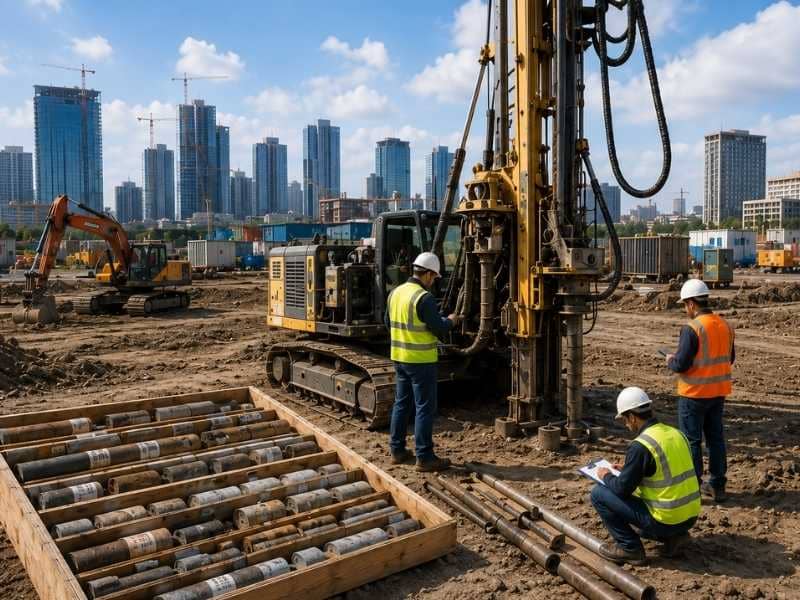
According to Wikipedia, geotechnical engineering, also known as geotechnics, is a branch of civil engineering that is concerned with the engineering behavior of earth materials. It applies the principles of soil mechanics and rock mechanics to solve engineering problems involving the ground. The field also incorporates knowledge from geology, hydrology, and geophysics to assess the physical properties of soil and rock.
Geotechnical engineering is essential in the planning, design, and construction of foundations, retaining walls, slopes, embankments, tunnels, dams, roads, and bridges. Geotechnical engineers conduct site investigations to evaluate soil and rock conditions, ensuring that structures are safe, stable, and capable of supporting the intended loads.
The discipline has applications in several engineering fields, including civil engineering, mining engineering, petroleum engineering, coastal engineering, offshore construction, and military engineering. It shares many concepts with engineering geology; however, geotechnical engineering focuses on applying engineering principles to earth materials, while engineering geology emphasizes the geological aspects of engineering projects.
Throughout history, humans have used soil for construction, flood control, irrigation, and building foundations. Modern geotechnical engineering has evolved into a scientific discipline that combines theoretical analysis, laboratory testing, and field investigations to address complex engineering challenges.